
How to Build a Direct Booking Website for Your Vacation Rental
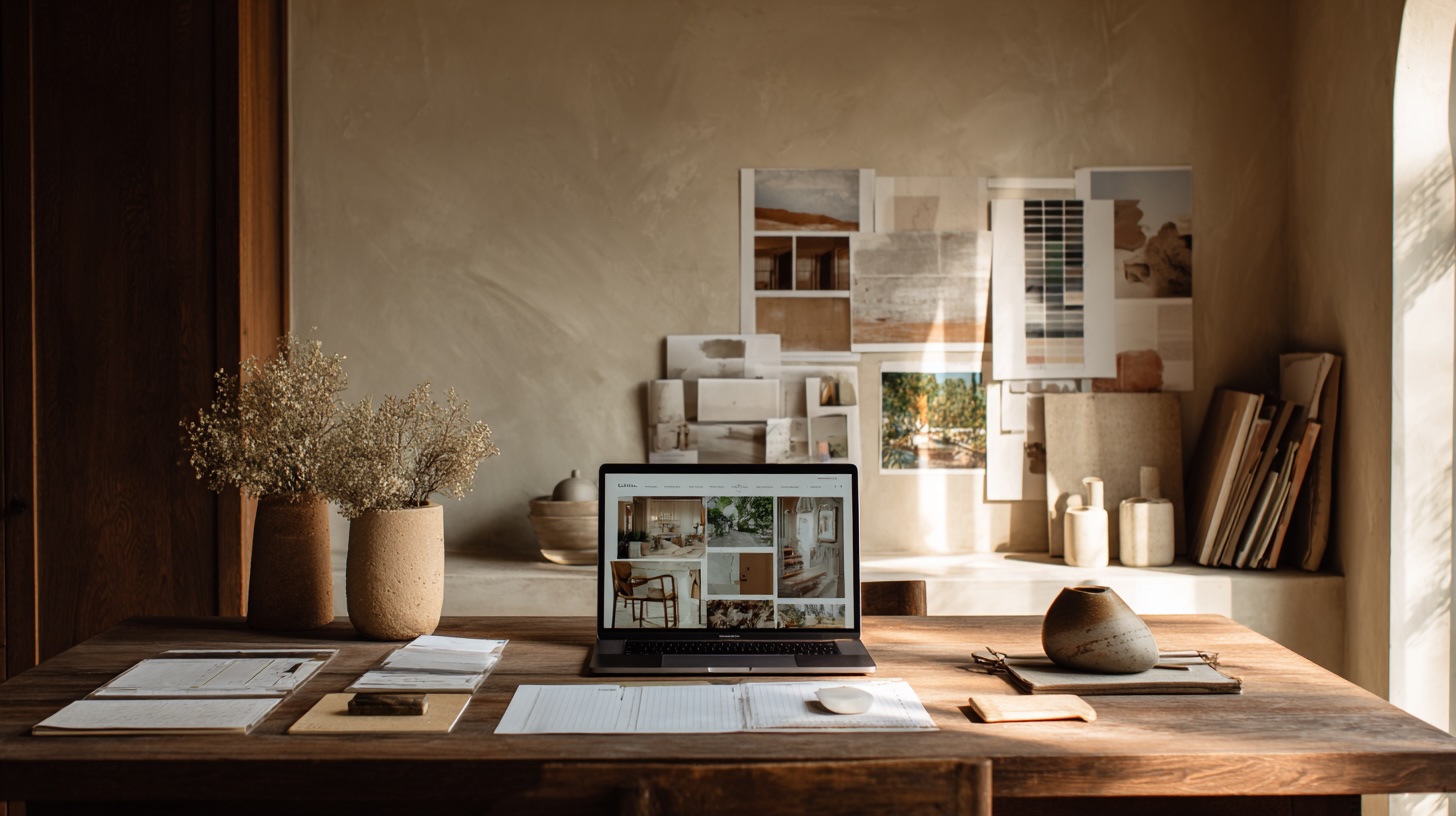

The question most vacation rental owners ask when they start thinking about going direct isn't should I? — it's where do I even start?
Building a website sounds like a project: expensive, technical, requiring skills you may not have and time you definitely don't. The reality is more manageable than that, and the economics justify the effort quickly. A single week-long booking that came in direct — without an Airbnb service fee — typically covers a year's worth of website costs. The question isn't whether it's worth it. It's how to do it without overcomplicating it.
This is the practical version: what you actually need, what you can skip, and how to build something that takes real bookings.
What a Direct Booking Website Actually Needs to Do
Before thinking about platforms or design, it helps to be clear about the job. A direct booking website for a vacation rental needs to do four things:
- Show the property — photography, description, amenities, location
- Answer the questions that guests ask before they book (rates, availability, house rules, what's nearby)
- Build enough trust that a stranger feels comfortable paying you directly
- Make it easy to book — check dates, submit a request or instant-book, pay
Everything else — blog posts, SEO landing pages, email capture — comes later and adds value over time. The first version of your site just needs to do those four things well.
Choosing Your Platform
There are three sensible approaches depending on your situation.
Option 1: A Booking-First Tool with a Built-In Website
Tools like Lodgify, Hostfully, and Hospitable are built specifically for vacation rental owners. They combine a channel manager (which syncs your calendar across Airbnb, VRBO, and your direct site) with a simple website builder and a booking engine.
Best for: Owners who are still listing on platforms but want to start capturing direct bookings alongside them. The calendar sync prevents double bookings, and the setup is fast — most owners have a functional site within a day.
Costs: Roughly $10–$30/month depending on the plan.
Limitations: The design flexibility is limited. These sites look professional but not distinctive — which matters more for some properties than others.
Option 2: A Website Builder with a Booking Integration
Squarespace or Webflow for the site, with a booking widget from Lodgify, Hostaway, or Smoobu embedded into it. This gives you more design control while keeping the booking functionality handled by software built for it.
Best for: Owners who care about how the site looks and want the property to feel as considered online as it does in person. A design-led home deserves a website that reflects its design.
Costs: $20–$40/month for the website platform, plus booking software costs. More if you hire someone to build it.
Limitations: More setup time. You're managing two tools rather than one, and changes to the booking flow sometimes require updating in two places.
Option 3: A Full Custom Site
WordPress with a vacation rental plugin (like WP Rentals or Booqable), or a fully custom build. This gives you complete control over design, SEO, and functionality.
Best for: Owners with multiple properties, or those thinking seriously about SEO as a long-term traffic channel. A custom WordPress site can be optimised in ways that hosted platforms can't.
Costs: Variable — from $0 if you build it yourself to several thousand if you hire a developer. Ongoing hosting is typically $10–$20/month.
Limitations: The most time-intensive option. Not necessary for a single-property owner in the early stages.
Option 4: Let Locèlle Build It for You
If the idea of choosing platforms, integrating booking tools, and writing SEO-optimised copy sounds like a project you'd rather hand off — that's exactly what Locèlle does. We build direct booking websites for design-forward vacation rental owners: designed to reflect the property, built to rank in search, and set up to take bookings from day one.
Best for: Owners who want a professional result without the learning curve, and who want their direct booking presence to feel as considered as the home itself.
How it works: You share your property details, photography, and goals. We handle the rest — design, copy, booking integration, and basic SEO setup — and deliver a site that's ready to go live.
Get in touch to find out more about having Locèlle build your direct booking website.
What to Put on Each Page
Homepage
Your homepage is doing one job: making a guest want to stay. Lead with your best photograph — not a collage, not a slideshow, one photograph that captures the feeling of the place. Follow it with a short, specific description that answers the question "what kind of home is this, and who is it for?" Then a clear call to action: check availability, view the property, contact the owner.
Resist the impulse to put everything on the homepage. The guest who arrives at your site already wants something — give them a clear path to finding out if it's this.
Property Page
This is where you earn the booking. What to include:
- Photography: 20–40 images minimum. Every room, the exterior, the view, the details that make the home what it is. Professional photography is the single highest-ROI investment a rental owner can make.
- Description: Write for a specific person — the guest who would love this home. What kind of traveler is it for? What will they feel when they arrive? What can't they find anywhere else? This isn't a spec sheet; it's an invitation.
- Amenities: Specific beats general. "Espresso machine, cast iron cookware, soaking tub with garden view" tells a guest more than "fully equipped kitchen" and "luxury bathroom."
- Rates: Be transparent. State the nightly rate, the cleaning fee, and any minimum stay requirements. Don't make guests request a quote for information that should be visible.
- Availability calendar: Updated and accurate. Nothing erodes trust faster than inquiring about dates and being told they're taken.
- Location: Enough to tell guests what they're getting (coastal, mountain, rural, etc.) and what's nearby, without giving the exact address publicly.
About the Owner
This is the page most vacation rental websites skip, and it's one of the most important for direct bookings. When a guest books direct, they're trusting a person, not a platform. A short, genuine note from the owner — who you are, why you built or bought this home, what you want guests to feel when they stay — does more for conversion than almost any other element on the site.
A photograph of yourself helps. Not a professional headshot necessarily; a photograph that looks like a person.
House Rules and FAQ
Saves you answering the same questions repeatedly and gives guests the information they need to decide. Cover: check-in and check-out times, pet policy, parking, noise, the nearest grocery store and hospital, and what happens if they need to cancel.
Booking / Contact Page
Make it easy. A calendar availability widget is ideal; a simple inquiry form with date fields is the minimum. Include a phone number or email address — some guests, particularly for high-value bookings, want to speak to a person before they commit. Let them.
How to Accept Payment Direct
This is the part that feels most uncertain to owners who've only ever collected money through a platform. In practice, it's straightforward.
Stripe is the standard: easy to set up, trusted by guests, integrates with every major booking tool. You can also take bank transfers for longer stays where guests are comfortable with them.
What you should never do: accept cash in advance, accept payment via services like PayPal Friends & Family, or ask guests to pay to a personal account without a paper trail. These create both legal and trust problems. Keep payments through a proper processor and send a confirmation for every transaction.
The SEO Opportunity in a Property Website
A direct booking website, built correctly, is also a long-term SEO asset. A page titled "Kennebunkport Farmhouse Vacation Rental — Book Direct with the Owner" will eventually rank for that search and bring you guests who found you without any advertising spend. This takes months to build, not days — but it compounds indefinitely, and it's a channel that Airbnb's algorithm can never take from you.
To give your site the best chance of ranking:
- Put your location, property type, and "book direct" or "direct from owner" in your page title and meta description
- Write a genuine description of what's nearby — restaurants, activities, distances to major towns — because this is what local SEO is built on
- Get your property listed on Google Business Profile if it operates as a business
- Build a few links to your site from relevant directories, local tourism sites, or press coverage
You don't need to become an SEO expert. You need a site that describes your property accurately and specifically, loads quickly, and earns a few external links over time. Everything else follows from that.
What Not to Do
A few mistakes that are common enough to be worth naming:
Don't build the site before you have professional photography. The photography is the site. A beautifully built website with poor photographs will not convert. Get the photography first.
Don't try to compete with Airbnb on volume. Your website doesn't need millions of visitors. It needs the right guests to find it, trust it, and book. Depth of relationship beats breadth of reach.
Don't disappear after you launch. A direct booking website is not a passive asset in the early stages. You need to respond to inquiries quickly, keep the calendar updated, and be easy to reach. The owners who succeed at direct booking are the ones who treat it like the business it is.
Don't abandon the platforms immediately. Many successful direct-booking owners maintain a presence on Airbnb or VRBO while building their direct channel — using the platforms for discovery and quietly directing return guests to book direct next time. The transition can be gradual.
The Longer View
A direct booking website is not just a way to avoid a service fee. It's infrastructure for a business you own — a place where your guests can find you regardless of what any platform decides to do with its algorithm or its pricing next year.
The owners who have built something durable in this space share a common quality: they thought about the guest relationship first. The website, the booking process, the welcome note, the local recommendations — all of it signals to a guest that they're staying with a person who cares about the experience, not a listing optimised for a platform. That signal is what justifies the direct booking. And it's something no algorithm can replicate.
Locèlle lists design-forward vacation rental homes for direct booking across the US — and builds the direct booking websites that go with them. If you want your property in the collection, or want us to build your direct booking presence from scratch, we'd love to hear from you.


Discover homes worth traveling for
Join the Locèlle newsletter for design-led stays and off-market finds
Get on the list
Discover homes worth traveling for
Join the Locèlle newsletter for design-led stays and off-market finds
Get on the list